The Five Guard Types, Honestly Compared
Not all "gutter guards" earn the name. Five designs dominate the market, and they perform very differently under New England conditions:
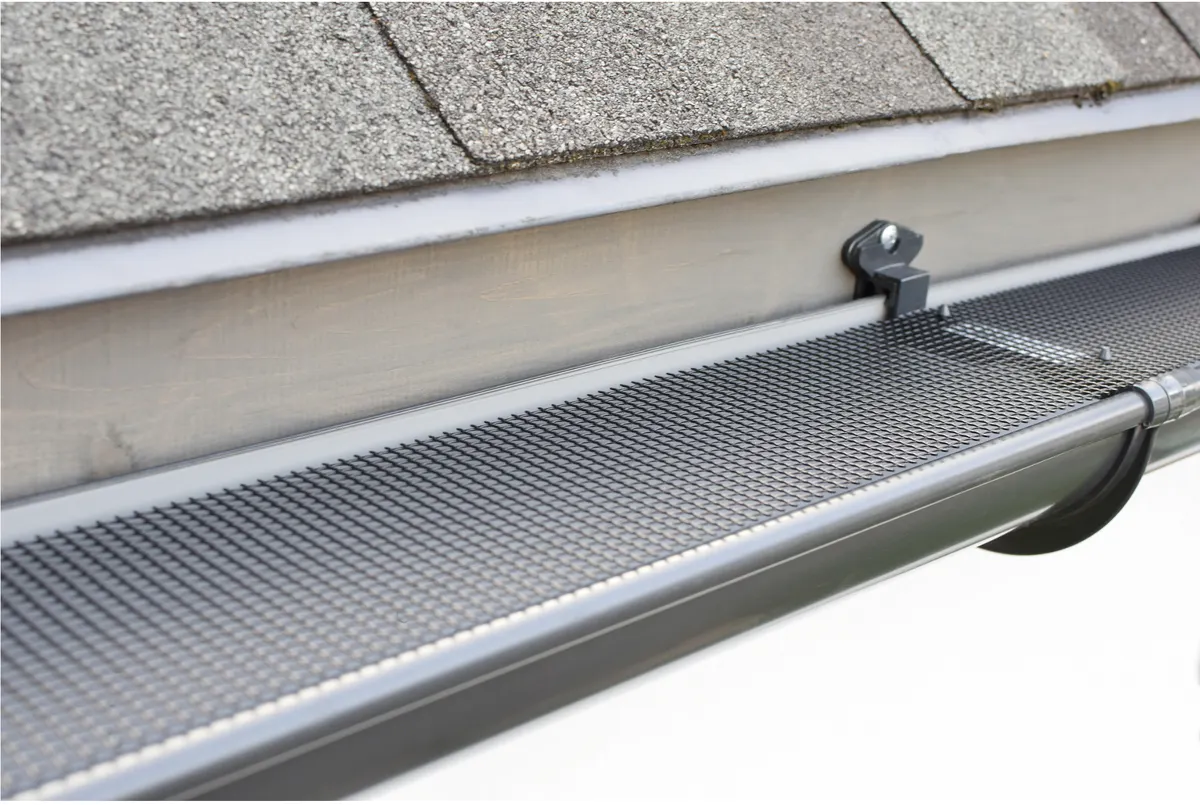
- Micro-mesh — fine stainless screen over a rigid frame. Blocks everything down to shingle grit and pine needles. The strongest performer in freeze-thaw climates, and the type most worth professional installation.
- Screen guards — coarser metal or plastic grids. Stop leaves, pass needles and seeds; budget-friendly but need periodic clearing.
- Surface-tension / reverse-curve — water wraps the nose while debris sheds. Effective, but visible from the street and fussy about roof pitch.
- Foam inserts — porous blocks inside the trough. Inexpensive, but they hold moisture, freeze solid, and seed themselves with maple sprouts within a few seasons.
- Brush guards — bottle-brush bristles. Easy to install, quick to tangle with oak catkins and needles — a maintenance item, not a fix.
Winter Performance Is the Test
Any guard sheds October leaves. The question is February: a sealed micro-mesh surface gives ice less to grab than an open trough of frozen debris, and clear gutters remove the blockage that turns roof meltwater into an ice dam at the eave. Guards don't fix the attic-insulation side of ice dams — but they eliminate the debris side entirely.
Boston-area precipitation peaks in December and March (NWS Boston normals) — exactly when clogged gutters do their worst.
Request a Free Estimate
Prefer to talk now? Call (617) 752-0673 — or send the details and a local specialist will reach out.
Request received.
A local specialist will reach out shortly. Urgent? Call (617) 752-0673.
The 5-Year Math: Guards vs. Repeat Cleaning
| Path | 5-year outlay | What can still go wrong |
|---|---|---|
| Twice-a-year cleaning | $1,500–$2,500 (10 visits) | Clogs between visits; storm-timing risk; ladder access in winter |
| Micro-mesh guards, installed once | $4–$11 per linear foot, one time | Occasional surface brushing; keeps working mid-storm |
Gutters already full?
Guards go on clean, working gutters. If the system needs a clear-out first — or a section has sagged out of pitch — start there. Gutter cleaning → | Gutter repair →