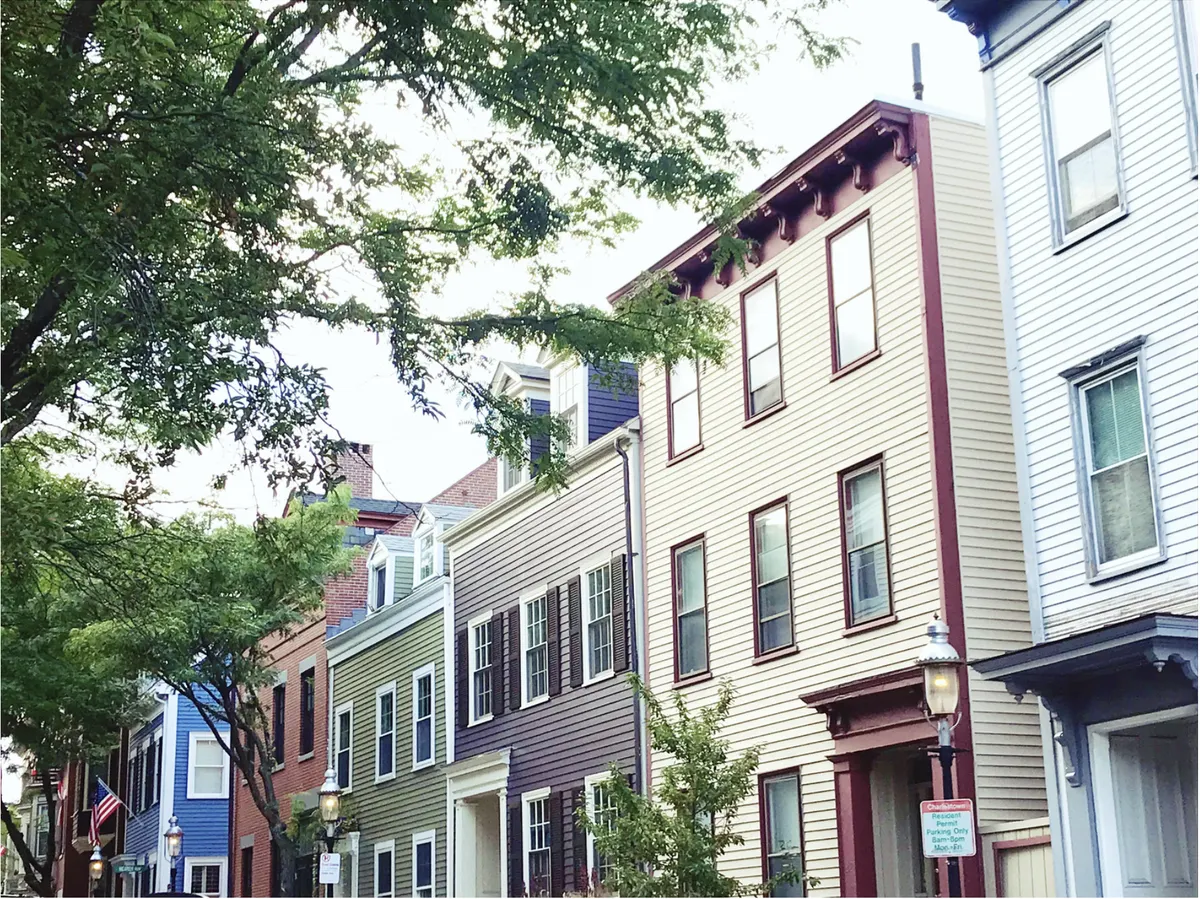
Old Housing, Big Trees, Real Winters
Wollaston concentrates everything the city's Housing Production Plan says about Quincy's age of housing — 37% of the city predates 1940, and the Hill's capes and colonials are exactly that vintage. Original fascia boards, steep pitches, and mature oak and maple canopy overhead make for a specific seasonal rhythm: heavy leaf load in fall, ice dams in deep winter, and overflow in the December and March precipitation peaks.
The Ice-Dam Neighborhood
Pre-war attics were built before insulation standards existed, and many still run warm. Roof heat melts the snowpack from beneath; meltwater runs to the cold eave and refreezes — and if the gutter below is loaded with frozen November debris, the dam has a foundation to build on. The gutter-side defense is straightforward: enter winter clean, keep water moving, and let micro-mesh guards hold the line through February. The attic-side fix is insulation — a different trade, honestly said.
What Wollaston Homes Book
- Twice-a-year cleaning — the baseline under this much canopy.
- Guard installation — the upgrade that ends the cycle; pays for itself against ~10 cleaning visits over five years.
- Seam and pitch repairs — sectional systems on older homes fail joint by joint.
- Replacement — for systems that predate the current owner; seamless runs sized to steep pre-war pitches.
Housing stock: City of Quincy Housing Production Plan (mass.gov). Precipitation timing: NWS Boston normals.
Request a Free Estimate
Prefer to talk now? Call (617) 752-0673 — or send the details and a local specialist will reach out.
Request received.
A local specialist will reach out shortly. Urgent? Call (617) 752-0673.