Month by Month
| Months | What's happening | The gutter task |
|---|---|---|
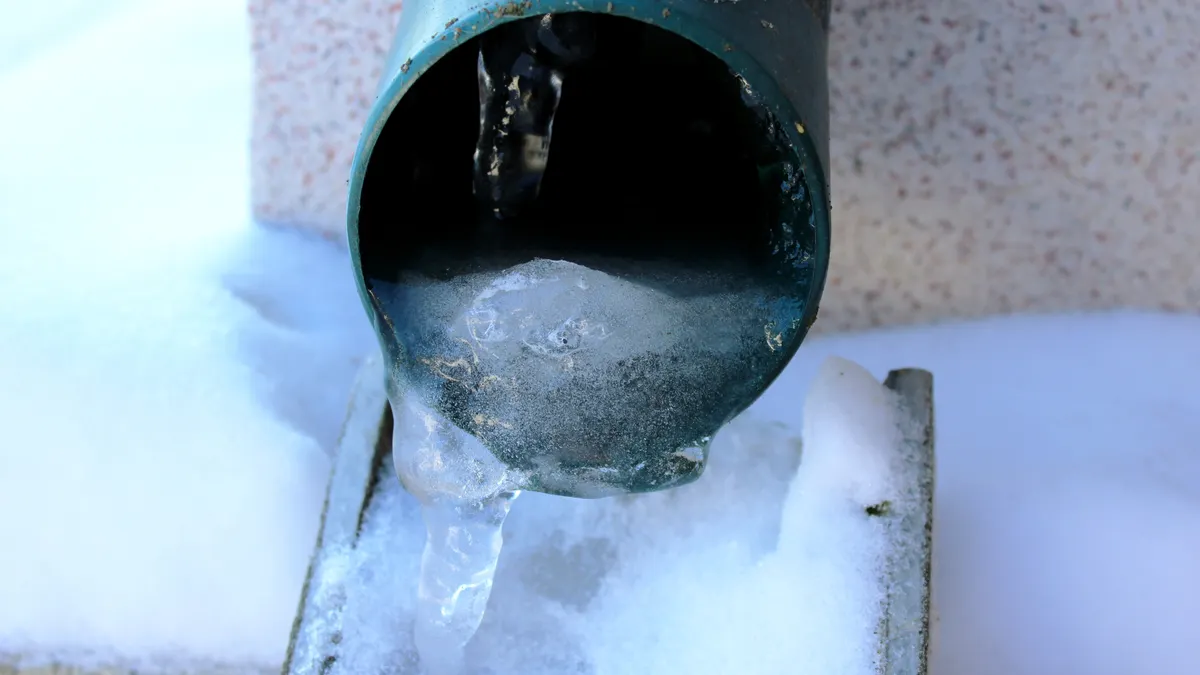
| Dec–Feb | Peak precipitation (December), snowpack accumulation, and the freeze-thaw cycling that builds ice dams on Quincy's pre-1940 rooflines — 37% of the city's housing stock. | Watch for icicle curtains at the eave (the ice-dam tell), relieve ice-loaded gutters before they tear hangers, and book winter repairs promptly. |
| Mar–Apr | The year's other precipitation peak (March) hits during snowmelt — maximum water moving off roofs, often over gutters still holding winter debris. | The post-winter inspection: pitch, seams, and hangers all just survived their hardest season. Small repairs caught now cost repair money, not replacement money. |
| May–Jun | Maple seeds helicopter down citywide — the debris season nobody plans for — followed by oak catkins. Salt-air corrosion season begins on coastal streets as onshore exposure picks up. | Spring cleaning, timed after the seed drop finishes. On Squantum, Houghs Neck, and Adams Shore, add a freshwater rinse of coastal-facing runs. |
| Jul–Aug | The dry(er) season — August is among Boston's driest months — punctuated by thunderstorm downpours that test capacity in minutes rather than days. | The upgrade window: replacements, installations, and guard projects run fastest and schedule easiest now, ahead of the fall rush. |
| Sep–Oct | Hurricane-remnant and early nor'easter season on the exposed coast; the oak-and-maple canopy starts loading gutters as drop begins. | Post-storm hanger checks on peninsula streets; book the late-fall cleaning slot now — they sell out during the drop, not before it. |
| Nov | Leaf drop finishes (oaks last), first hard freezes arrive, and December's precipitation peak is next on the calendar. | The most important gutter task of the year: the late-November clean-out. Whatever is in the troughs at first freeze stays until thaw — as ice mass, dam anchor, and hanger load. |
Why Quincy's Calendar Is Harsher Than the Region's
Three local multipliers sharpen the standard New England schedule. First, housing age: pre-1940 attics lose heat, and heat loss is what turns snowpack into ice dams — Wollaston's capes are the textbook case. Second, the coast: 27 miles of it, putting whole neighborhoods (and all of Hull) in salt-air territory that ages finishes and fasteners on an accelerated clock. Third, the ledge: West Quincy's granite doesn't absorb runoff, so every gutter failure delivers its water directly to a foundation.
The calendar's two non-negotiables: the late-November clean-out before first freeze, and the March inspection after the thaw. A roofline that hits both, every year, rarely produces emergencies in between.
Opting out of the calendar
Micro-mesh guards remove the two cleaning entries and most of the ice-mass risk — the 5-year comparison covers whether they pay on a given house. Guards vs. cleaning →